
Certified Passive House Professional Training
Become a competent Passive House Designer/Consultant by learning everything from how to define the thermal envelope to how to overcome frequent planning and construction challenges. This course will take you into the details of Passive House buildings to ensure that the desired energy savings are actually achieved and that the building will perform as planned!
AllClimate Passivhaus delivers Passive House Institute’s official training materials in both English and Filipino. Our instruction specializes in real-world application across extreme climates—from very cold winters to intense tropical heat and humidity. We are proud to be the world’s first Filipino-speaking entity accredited to deliver the Certified Passive House Designer/Consultant course, making global building science fully accessible locally.
Who It's For:
This program is designed for forward-thinking built-environment professionals looking to lead the net-zero transition. Learn the fundamental principles and benefits of the world’s leading energy efficiency standard through a comprehensive course that covers everything from high-quality insulation to airtight construction and thermal bridge-free design.
- Architects & Building Designers looking to master energy modeling and sustainable envelope design.
- Engineers focused on high-efficiency HVAC, ventilation, and building services.
- Contractors, Project Managers, & Tradespeople aiming to deliver defect-free, high-performance builds.
- Sustainability Consultants & Policy Makers seeking a globally recognized credential.
Steps to become a Certified Passive House Professional
PH0 Passive House Basics
|
In preparation for the course modules, this 2-hour e-learning will give you an overview of the Passive House Standard, the certification requirements and the different elements you need to consider when designing and building Passive Houses. In addition to Passive House principles, building physics topics such as heat and moisture are addressed. The basics of opaque and transparent elements of the building envelope, thermal bridges and air tightness are taught, as well as the basics of ventilation, heating, cooling and hot water. A first insight into the Passive House Project Planning Package (PHPP) completes the online course. All the topics included here are covered in greater depth and detail in the subsequent course modules. The content of the e-learning is assumed to be known in the following course modules. |
PH1 Building Envelope
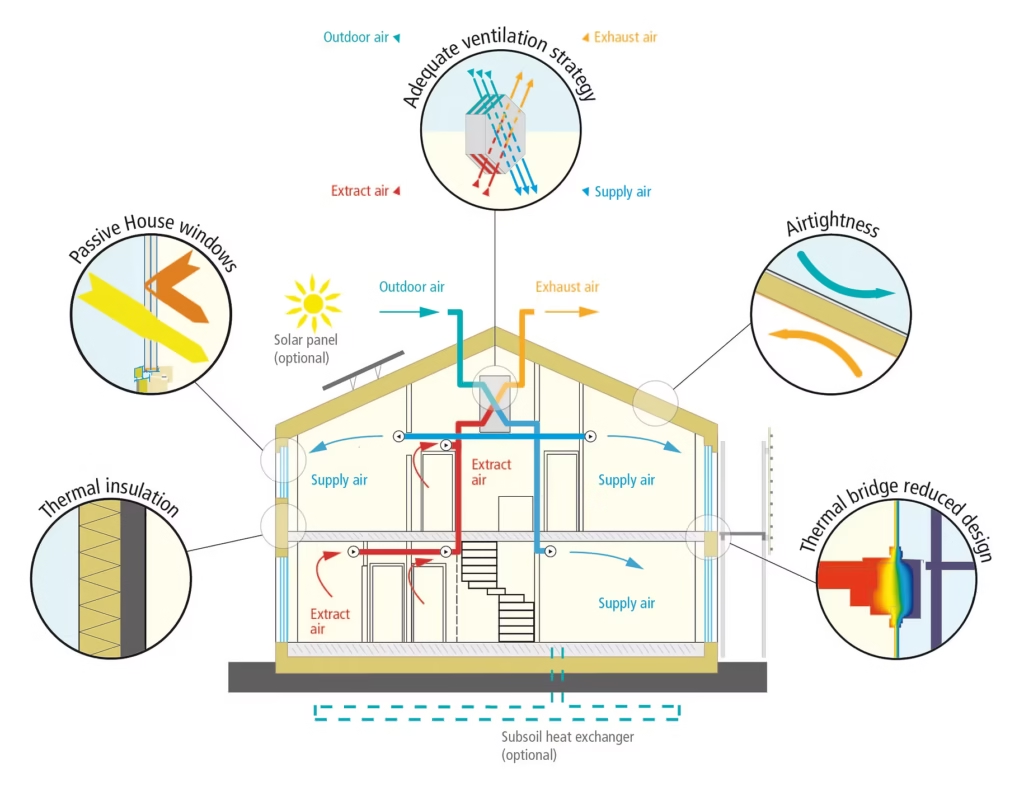
You will gain indispensable knowledge about the opaque and transparent areas of an energy-efficient building envelope for residential and non-residential buildings. Physical basics such as thermal conduction, moisture protection and thermal comfort in different climate zones will be addressed, as well as calculations of U-values, psi-values or fRsi-values and the topic of thermal bridges and their effects. Products, materials, constructions and connection details suitable for Passive Houses are explained using numerous examples.
Another important topic is the airtightness of a building. This module deals with the effects of a lack of airtightness and planning principles and example details for airtight constructions in solid and lightweight construction. A practical exercise on airtightness measurement and the area of thermography completes this topic.
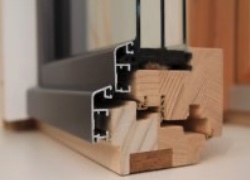
Furthermore, construction principles, physical requirements in different climates and installation situations of windows suitable for Passive Houses are dealt with in detail. A wide range of highly energy-efficient glazing, windows and glass facades is shown in many examples.
Another focus of this module is on the topic of ventilation. Knowledge of physical principles, system concepts and components of a mechanical ventilation system with heat recovery, preventive fire protection and economic efficiency are taught as well as the installation and adjustment, as well as the dimensioning of system components and the design of volume flows and air exchange rates. Skills relating to the planning of ventilation systems and duct networks are taught in lectures and exercises supported by practical working aids.
PH2 Building Services
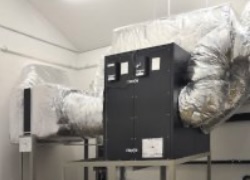
The focus of this second module is on the heating and cooling of highly energy-efficient buildings. Physical principles and calculations of primary energy, heating heat, heating load and heat gains are taught in connection with the calculation procedures of the Passive House Project Planning Package (PHPP).
Concepts for the use of various heat generators and system set-ups in Passive Houses are covered, as are the various components and the planning of heating and hot water generation. In addition, planning principles for heating and hot water distribution and drinking water supply suitable for Passive Houses and measures for avoiding distribution and storage losses are taught using many examples. You will also gain knowledge and planning aids for summer thermal insulation, passive and active cooling and moisture recovery for all climates.
Another focus of this second module is on the topics of highly energy-efficient renovations and the economic efficiency of energy-efficient measures. In many examples of successful energy-efficient refurbishments with Passive House components, special physical and constructional problems in refurbishment projects and their solutions are presented – both for the building envelope and for the building services. In the area of economic efficiency, knowledge of life cycle assessments and dynamic methods of investment calculations is conveyed in addition to examples of cost reduction in highly energy-efficient buildings. Exemplary comparisons of the economic efficiency of passive houses and low-energy buildings conclude this module.
PH3 PHPP Basics
Learn how easily and reliably energy-efficient buildings and renovations can be individually planned – with the Passive House Project Planning Package (PHPP), the energy balancing and planning tool for efficient buildings and modernisations. In this module, in addition to an overview of the PHPP and its structure, all the knowledge required to enter a residential building into the PHPP is imparted – both for the area of the building envelope and for the building services. PHPP calculations are explained and linked to the calculation of characteristic values taught in the previous modules. In addition to the representation of renewable energies in the PHPP, primary energy and the use of the pioneering PER factors developed by the Passive House Institute are also discussed. Many exercises and input aids facilitate the start with the PHPP.
PH4 Exam Preparation
This module prepares you in the optimal way for the exam to become a certified “Passive House Designer/Consultant”. In addition to many repetitions and exercises, there is sufficient time to answer your questions. Typical calculations are carried out and practised using examples and comprehensive information is provided on how to prepare and work through the exam.
PH5 CPHD/C Exam
There are two methods of becoming a certified Passive House Designer or Consultant: through submission of a certified Passive House project, or by passing the standardized international exam. The exam is offered by AllClimate Passivhaus in cooperation with PHI. Certified Designers and Consultants will be listed on the international database. For information on certification via project design and documentation please see PHI’s Project Qualification page.
The exam is thorough and time-limited, and it is not recommended that you attempt the exam without first taking courses PH1, PH2, PH3, and PH4 offered by AllClimate Passivhaus.
The exam is one and a half hours (90 minutes) in length. The Certified Passive House Designer/Consultant exam will be conducted in an online format. This format is subject to change according to the Passive House Institute policies.
There will be a 60 minute required tech check meeting a few days before the exam date. Details will be emailed directly to registrants.
Participants must supply a valid PHPP registration number in order to write the exam. PHPP can be purchased on our website. Please allow at least 1-2 business days for processing.
Information on examination regulations and detailed learning targets can be found on the PHI website. Briefly, the exam will include material on:
- Passive House definition
- Passive House criteria
- Thermally insulating envelope
- Airtight building envelope
- Transparent exterior components
- Passive House ventilation
- Heat supply system
- Hot water generation
- Summer comfort and space cooling
- Electrical energy
- Energy balancing
- Economic efficiency calculation
- Invitation to tender, construction management and quality assurance
- Building user information and support
- Retrofitting with Passive House components (EnerPHit)
- Calculations, quantities, units
The examination is marked by AllClimate Passivhaus and then sent to PHI for second review. Participants are notified directly via email by PHI approximately 4 weeks after the exam of whether they passed or failed.
PHI will issue either a Passive House Designer certificate or Passive House Consultant certificate to successful participants, depending on educational qualifications. To acquire the Passive House Designer designation, substantiated educational qualifications are required, which allows the applicant to independently design buildings or technical building systems. A copy of a document providing evidence of this qualification (degree, master craftsman’s certificate or similar documents, translated into English if applicable) must be provided to AllClimate Passivhaus at the time of writing the exam; we will forward this proof to PHI. Examination participants whose qualifications do not meet the specified requirements, or who do not provide any proof of their qualification, will receive the Passive House Consultant certificate. For more information on the distinction between “Designer” and “Consultant”, please visit the PHI webpage Certified Passive House Designer vs. Consultant.
Frequently Asked Questions
Professional Certification and Renewal:
What is the difference between a Passive House Designer and a Passive House Consultant?
Both titles are equal in terms of qualification with reference to the Passive House relevant knowledge. The requirements for attaining this certificate and for renewal are also the same. The only difference between Certified Passive House Designers and Consultants depends on your background, as far as Designers come from highly relevant fields. Consultants, on the other hand, can come from any background. Normally, Passive House Designers work in planning offices on the concrete implementation of the Passive House Standard, while Passive House Consultants usually contribute to its dissemination through their work as researchers or speakers, or as decision makers in government authorities.
A clear classification is not always easy due to the diverse educational qualifications, professions and the legal provisions relating to buildings worldwide. For this reason, the Passive House Institute has specified two possibilities for classification as a “Certified Passive House Designer”:
- Providing proof of an educational qualification which enables you to plan buildings or technical building systems independently. This educational qualification should have reached a certain level (e.g. diploma or bachelor’s degree) and have been attained in a specialized subject that primarily involves the planning of buildings or building services systems.
- Providing proof of membership in an institution, whose members are entitled to provide planning services that are subject to approval by a building authority (e.g. Chamber of Architects).
You qualify for the Designer title if you have the following educational qualification:
- Architect or interior designer
- Civil or timber construction engineer
- Building physicist
- Building and energy technology engineer
- Building contractor
- Master carpenter
- Certified technician for structural engineering, building construction, heating plumbing and ventilation technology or supply technology
If you have the following educational qualification, you qualify for the Consultant title:
- Degree in (analytical) chemistry, electrical engineering, or manufacturing engineering
- Engineering degree in environmental technology and resource management
- Construction industry environmental safety technician
- Environmental engineer
- Gas, plumbing, and ventilation systems technician
- Woodwork technician
- Certified technician for electronics
- Energy consultant
- Architectural draftsman
- Geometrician
- Woodwork technician for window installation
- Managing director
- Property sales manager/estate agent
- Economist
Note: You just have to provide a copy of the proof to your course/examination host or assessing body. The attained Consultant title can be changed into the Designer title if such proof is only obtained and submitted later on (e.g. taking an examination during training). If no proof is submitted, the Consultant title will be granted upon successful qualification.
Will becoming a Certified Passivhaus Tradesperson or Designer enable me to certify Passivhaus buildings?
No, this requires a separate qualification. Read more about how to become a Passivhaus Certifier here.
For how long is the Certified Passive House Designer/Consultant certificate valid?
The Certified Passive House Designer / Consultant certificate is valid for 5 years. After that the certificate can be renewed in two ways:
- By submitting project documentation, it is possible to renew a certificate at any time, even if your certificate has already expired some time ago (for this you need to be the Passive House designer/consultant of a building that gets certified).
- You can also renew your certificate through credit points for continuing education by attending events, conferences, and additional courses.
I'm already a CPHD/C, can I get CPD credits for renewal if I take this course?
Completion of this official course awards 72 Continuing Professional Development (CPD) credits recognized by the Passivhaus Institut for the renewal of Certified Passive House Designer, Consultant, and Tradesperson credentials.
My certificate has already expired or is about to expire, what should I do?
No problem! By submitting a project documentation, it is possible to renew a certificate at any time, even if your certificate has already expired some time ago. You can also extend your certificate if you have attended continuing education events and have acquired 100 CPs within the last 5 years
Course:
Are there prerequisites for the course?
Our training is aimed at professionals in the construction industry and you will need a working knowledge of construction systems and design, an ability to read plans, and a basic understanding of maths and Microsoft Excel. You may find these videos helpful to familiarise yourself with the level of maths required:
- Rearranging Equations video
- Transposition (Rearranging Equations) Introduction – Series of 5 videos
What are the requirements to join to course?
- Calculator, notebook, pens, ruler
- Desktop/Laptop with Microsoft Excel or equivalent installed (PHPP is Excel based), mouse and two monitors recommended.
- Area measurement software such as Autodesk Design Review (free) or Bluebeam Revu (free trial)
- Although PHPP demonstration files will be provided for use during the course, we recommend you purchase the PHPP software prior to attending the course. The PHPP manual is provided with the purchase of the software and is useful in understanding all of the features.
- Please note that PHI now requires examinees to supply a valid PHPP registration number when writing the exam.
Are the live sessions recorded?
Yes, recordings will be available via the learning platform after each session. In our experience, the best outcomes happen when you attend live, so we encourage you to try to make all the live teaching sessions.
Are classes live? Do I have to log in at a specific time?
Each Module is structured into around 4.5-hour live online sessions. All live sessions will be recorded, so that you can rewatch them later while preparing for the exam or in case you were unable to join the live session.
You’ll get many of the benefits of learning in-person but from the comfort of your own home with the flexibility of your own hours.
Can I defer or cancel a course?
The course / exam can be cancelled free of charge up to two weeks before the course / exam starts. In case of a later cancellation, a fee of 50% of the course fee will be charged.
Cancellation or termination after the start of the course / exam can not be considered. The same applies in the event of non-appearance without prior cancellation.
Cancellation of the course / exam by the AllClimate: Should the course / exam be cancelled for an important reason (e.g. illness of the course instructor or insufficient number of participants), the course / exam fee will be refunded in full. Other possible costs incurred cannot be reimbursed.
How long do I have access to the self-study videos?
You will have access to our learning platform for 1 year, so you can refresh your knowledge after the exam and once you start your Passivhaus professional journey.
What materials are provided for the class?
All the slides and course material from the ‘Passive House Design and Construction’ module will be provided in a downloadable pdf format which you can then print and use during the preparation for the exam.
During the ‘CPHD/C Online Exam Preparation’ and the ‘PHPP workshop’ modules, we will share with you multiple handouts and booklets with exercises in PDF format.
You will get the Passive House Planning Package (PHPP) with a unique personal registration number. The PHPP is also required by the PHI to register for the exam.
All materials that we will share with you during the course, you can use at the exam as far as they are printed. Digital materials are not allowed at the exam.
We will give you access to all course materials from Module 1, 1 day before the course starts.
Is this course accredited by any institution?
Yes, the course is officially accredited by the Passive House Institute (PHI). Also, the Certified Passive House Designer/Consultant title that you will acquire after passing the exam, is accredited and valid worldwide.
What is the time commitment and schedule for the class?
In total, you will need around 80 hours to complete the whole course.
After the course is finished, to prepare for the exam, depending on your schedule, you can budget about 1 hour every day during the time between the course and the exam, or you can schedule a few longer sessions each week. In total the exam preparation will take you around 30 hours. Either way, the course is designed to immerse you in the learning process, while still fitting into almost anyone’s busy schedule.
Does it matter which time zone I’m in?
No, it doesn’t matter which timezone you are in. You can take this class from anywhere in the world. Also, the material at the course covers design and construction strategies for all climate zones. If you can’t join most of the live sessions, so you can the recorded session from the course Moodle platform.
Exam:
What questions are asked in the exam?
Please read Learning Targets.
What are the exam regulations?
Please read Examination Regulations.
Which material can I bring to the exam?
You can bring any printed course material and notes to the exam. To save time, consider doing a summary of the main Passive House formulas and requirements. We also advise you to bring markers for the design exercise, as well as a calculator with spare batteries. Digital materials are not permitted.
Can I take an exam in person?
All our exams are online only in accordance with PHI guidelines.
Can I take an exam without attending the full course?
Yes, this is possible, anybody can register for the exam. While it is not mandatory to have attended a dedicated Passive House course, it is strongly recommended to increase your chance of success. Please bear in mind that the exam is challenging and you need to ensure you are sufficiently prepared.
Do I need the PHPP software to write the exam?
Yes, you must have your own individual copy of the PHPP software, required to register for the CPHD/C exam.
Am I going to get a certificate?
After successfully passing the exam, you will get the Certified Passive House Designer / Consultant certificate issued by the Passive House Institute (PHI) in Germany.
After completing the whole course, we can also issue a certificate of completion stating the total course hours.
What are some tips to pass the exam?
- Go through the Examination Regulations & Learning Targets carefully and reflect on your confidence with each topic. Mind the gaps – then go ahead and bridge them.
- Study the Passive House Concept and its definition, criteria and practical implementation to detailed level. Sketch Passive House suitable details for different construction methods; regular build-ups and of course joints, window installations and the like. Customers will expect you to actually design such a building and be aware of all important elements.
- Internalize the “rules of thermal bridge free design” and their rationale. They are straightforward and invaluable guidance in everyday practice.
- Get familiar with the importance of airtightness, design and implementation of airtight layers and airtightness testing (methodology & practical execution)
- Study PHPP and energy balancing in general. What entities are required to compose the energy balance of a building? What is their respective impact? How does the balance react on changes of different parameters?
- Get proficient with actual PHPP use by entering a number of examples from A to Z. How can you make them a Passive House? Get valuable advices from the PHPP handbook! To understand what happens in PHPP you should also know how e.g. U-Values are calculated. Make use of the possibility to retrace the main algorithms in the spreadsheet formula.
- Get familiar with basic economic life cycle assessment (present value, annuity). Are you able to e.g. calculate the residual value based on given boundary conditions?
- Generally: Repeat and rehearse any calculations, sketches… During the exam, you must be able to quickly analyse what is given and required and set to work.
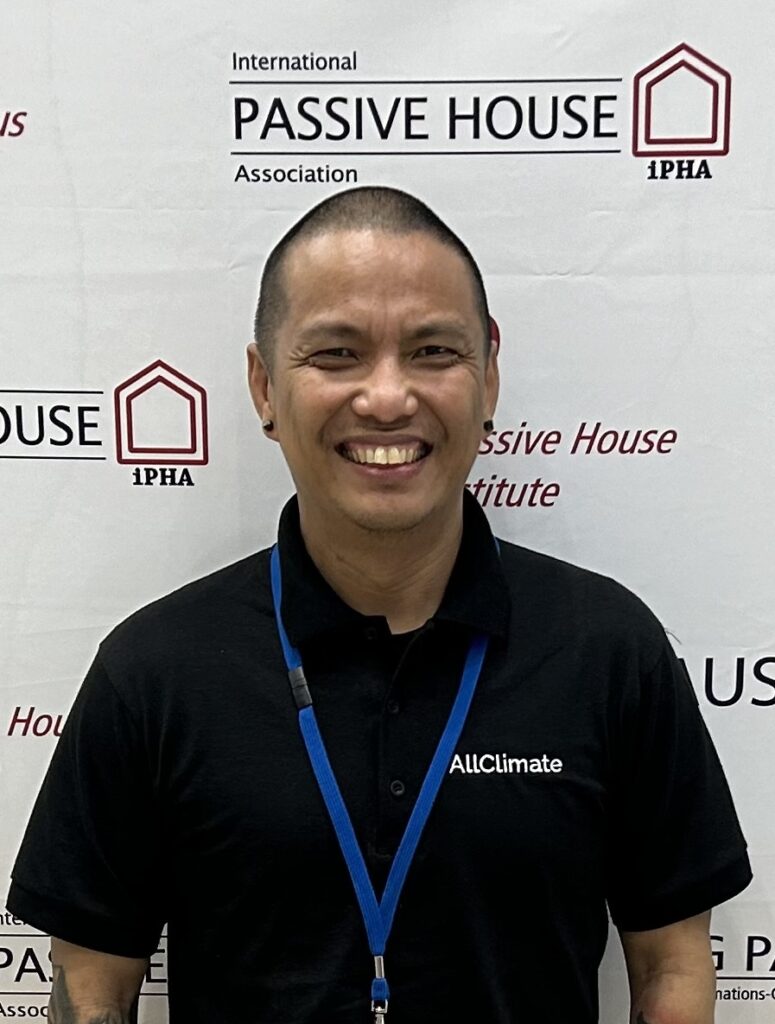
Norman A. Garcia is the Principal of AllClimate Passivhaus and the first Filipino Accredited Passive House Designer/Consultant course provider and Certified Passive House Construction Verifier by the Passive House Institute Germany.
A Civil Engineering graduate from the University of the Philippines Diliman, Norman practices in both Canada and the Philippines, specializing in energy efficiency consulting, high-performance building design, energy modeling, and airtightness testing.
Norman also holds qualifications as a Registered Energy Advisor Quality Assurance Specialist for multi-unit residential buildings with Natural Resources Canada and a Net Zero Energy Advisor with the Canadian Home Builders’ Association. Norman’s technical work is complemented by his service as a voting member on the Standing Committee on Housing and Small Buildings for the Canadian Commission on Building and Fire Codes (2020–2024) and his past role on the board of Sustainable Building Manitoba (2020-2022).
In 2024, Norman founded Passivhaus Philippines to advance the Passive House Standard in the country. When not consulting on building science, he enjoys traveling with his family and training in the gym.
Connect with Norman Garcia at LinkedIn.
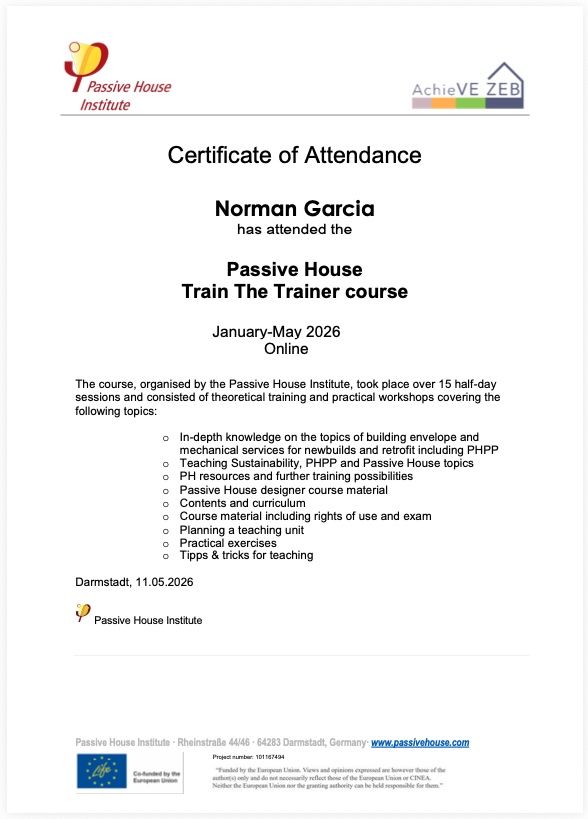
Instructor
Contact Us now to discuss your Passive House professional journey!
